
I have been completely disconnected with this federal election campaign. The policy platforms of both sides are indeed different as Quiggin says, but the Senate is going to block the objectionable parts of the Turnbull agenda, so functionally there wouldn't be much difference in practice, as there wasn't in the previous Turnbull era.
Both Turnbull and Shorten would be running the Rudd-Gillard agenda (NDIS, NBN, Gonski etc), along with the remaining irresponsibly deficit-ballooning Tory nudge policies left over from the failed Abbott experiment. Turnbull will continue the slow white-anting of Rudd's agenda but he can't change it, nor can he implement the worst of the dries' wrecking ball project.
Turnbull called a DD ostensibly to free himself up from the inertia of being prevented from doing anything by those on both sides. He'll probably get returned with a reduced majority, the godbothering faction in his party still intact and empowered by Brexit/Trump, and a Senate that is controlled by Xenophon and the Greens. The ultimate joke is likely to be on him because nothing will change. All he will have succeeded in doing is exhausting his previously stellar leadership ratings, which were the only thing going for him.
In the unlikely event of a Shorten win, he would govern from the centre leaning right, as opposed to Turnbull from the right leaning to the centre. Negative gearing changes would be positive, but would take many years to work properly. That is the same for most of Labor's good policy areas, like education and the environment: they are the Right Thing To Do but the additive effects to GDP and happiness will take years or decades to roll through the system. The legacy of Keating is that low-hanging fruits of reform and liberalisation have already been secured long ago, and all that is left is the unsexy stuff of benefits for future generations.
So, does that mean there is nothing at stake in this election? Ask a beneficiary of the NDIS, or someone lacking decent broadband options, or a refugee, or someone on the dole, or a uni student, or the chronically ill, or a working parent of young children. I'm just glad we have compulsory voting in this country, as otherwise we might suffer the same fate as the UK or US where too many young people don't bother to contribute to democratic outcomes. Both major parties might be smooshed up against each other in the centre which makes elections boring, but I'd much prefer that to the Idiocracy sequel in America, or the Til Death Do Us Part sequel in Brexit, I mean Britain.
Showing posts with label Shorten opposition. Show all posts
Showing posts with label Shorten opposition. Show all posts
Wednesday, June 29, 2016

Wednesday, April 13, 2016
The banality of small-time government
Apologies for another long break between blog entries. My business and my family have taken priority, and every time I thought to blog, I felt guilty. Things are turning around with the business, so here I am.
The other reason I haven't rushed to the authorial controls is that exactly nothing new has happened since I last blogged. As I said back then, Malcolm Turnbull has pretty much no room to move, constrained as he is by the right's Faustian bargains to not move to the centre, and the Senate's unwillingness to let him go further right. Thus all that remains, in the absence of vision, is the banality of small-time evils, as detailed by Josh Bornstein. The media is reduced to publicising Turnbull's thought balloons and reporting dutifully as this or that interest group shoots them down in screaming balls of flame. And, as Henry Blofeld has been wont to say, nothing is done.
This has led to the slow but inexorable frittering away of Turnbull's poll numbers, not only 2PP but his personal satisfaction ratings.
Turnbull's popularity plunge in Newspoll grows ever more spectacular. A new worst -10 (38:48) rating this past week means he has now lost 48 netsat points in four and a half months. Paul Keating alone is still ahead of him on that timescale (with 55 points lost in that time) but 55 points is the most Keating ever lost. If Turnbull loses another eight points soon he will set an all-time record for the most netsat points lost in less than eight months, if not longer.Like Rudd, he failed to take advantage of polls when they favoured him to go to a quick double dissolution, because the government carried a significant number of marginal seat holders who didn't want to be sacrificed for the good of the party. His netsats were the only reason he was installed in the first place, to sell the same old policies with a fresh set of teeth. Without them, he has nothing.
So, this leaves us with the underwhelming prospect of Bill Shorten playing Palaszczuk to Turnbull's Newman later this year. This fills me with ennui. However, I realise I'm not the sort of person at the moment to whom the difference between governments is personally discernable but I do empathise with those for whom it is, so I will still vote for him on behalf of those disadvantaged, disabled and disenfranchised who will benefit from a change of government. And, as always, Scott Morrison lurks.
Monday, September 14, 2015
The ultimate demise of Tony Abbott
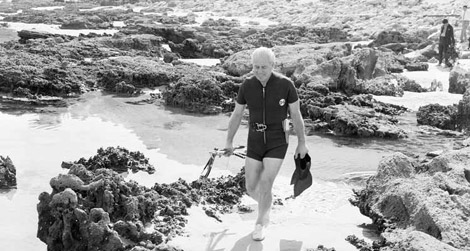
After getting knocked off 54-44 by Malcolm Turnbull in a spill this evening, Tony Abbott ends his career as the shortest serving Prime Minister since Harold Holt. Andrew Elder leads the celebration.
As a Prime Minister, he was a victim of the malaise affecting both parties: that neither right nor left can claim any connection with their respective bases any more. Labor can't claim it's the voice of workers since the Hawke/Keating era of neoliberalism which put a lock on real wage increases; the Liberals can't claim they're the voice of business because their anti-Keynesian stewardship implements anti-economic policies which are ultimately poor results for demand which underpins growth for business.
Coming mere days after the election of Jeremy Corbyn as the new leader of Labour in Britain, it is tempting to draw the conclusion when considering the concurrent rise of Syriza and Podemos - not to mention Bernie Sanders who is tipping Hillary Clinton to the left in the US Democratic primaries - that there is a resurgence of populist anti-inequality thinking among centre-left elites. This would most likely be too pollyannaish, as there's still a lot of power residing in the Blairite, Ruddeqsue, Clintonian centrist elites.
There is an argument that America was the first Western electorate to show the polarisation of the electorate with the centre unoccupied by anyone electable, which Europe has followed and the UK is only the last example. There are very few Blue Dog Democrats left, or centrist Republicans. Similarly, Blairites hold very little power in the current Labour Party.
From an domestic Australian perspective, nevertheless, I still have the capability to be cynical about this "victory" on behalf of the left. I still think the most likely scenario in the medium term is that Turnbull loses the next election, hopefully to Albanese or Plibersek. I shudder to think that NSW Right machine man Shorten will lead the ALP to the next meaningful clash. As an example, consider my old mate Paul J who has finally left the ALP after many years of service as a branch member, due ostensibly to asylum seeker policy but more broadly due to machine-based lack of democratic accountability.
Both sides of politics in Western countries should be facing their ultimate mortality because they have lost touch with their bases. When one or the other side is forced through electoral reality to face that weakness, democracy is the winner. I hope Labor is similarly shocked out of its ennui before the next election.
Sunday, November 16, 2014
Labor and labour, Democrats and demography

If we are indeed in an era where identity politics wins elections, and the right is the natural winner of such contests because it's well versed in operating sans policy, what is to become of the left? This is the focus of a lot of navel gazing in America right now post the disastrous midterm elections. For example, this NYT piece lays out a battle between the populism of Elizabeth Warren and the elitism of Hillary Clinton. I've written before about elitism versus populism, which I think is the most important political dialectic of our age, so I'm very much on board with that characterisation of the situation.
The first possible solution is to do nothing. And yes, there are valid arguments for waiting for the cycle to turn by itself. Especially in America, the current trend of old white people having a disproportionate say in politics is an artefact of the Baby Boomer generation growing haggard and conservative. The boomers have dominated politics and general society since the 1960s, and this is their last struggle before their bulge finally disappears from the other end of the Python Stomach Of Demography. The Tea Party is filled with boomers who enjoyed the fruits of the welfare state, including free education in some cases, but they don't want to share the wealth any more and can't see the point of planning for beyond their own mortality. In the face of harsh electoral reality of voting patterns, it's a perfectly legitimate tactic by Generation X to shrug our shoulders, sigh and bide our time until we can wave the most selfish generation in history goodbye as they roll past in their pine boxes. We've waited this long, a few more years won't be so bad.
If you read a lot of American leftist bloggers - and I have been doing so lately - the clamour is now to embrace Warrenite populism, otherwise known as class warfare.
The Democrats will still keep the presidency most of the time and the Senate at least some of the time, but our country will remain stuck, our government will remain dysfunctional, and the people will suffer. The Democrats have to address middle class economic and social anxiety, and that means they have to focus on class more than race. This isn't a recommendation that the Democrats make winning over the elusive white male voter their top priority, at least not in the ways this has been attempted in the past. It's a recommendation that the Democrats begin focusing heavily on the issues that are making middle class folks from all backgrounds so anxious. I'm talking about the fact that people can't afford college, that their kids can't afford to move out of their homes, that formerly "good" neighborhoods are being decimated by opioid addiction, and that our infrastructure is crumbling.There has been a lot of angst in the US left about the loss of the white male voter, as the Democrats have failed to offer the middle class worker much in the way of a helping hand even as the economy recovers from the 2007 crash. Wages remain stagnant, the recovery has produced a lot less jobs than previous such periods, and the guilty parties in the banks have not been punished while the middle class continues to suffer. Some of these things are not the fault of Obama, I know - I'm no supporter of the Green Lantern theory. Many Democrats are nonetheless just another part of the Washington village elite these days - albeit less of them since the Blue Dog Democrats were obliterated in the midterms - and the lack of a groundswell of support from elected officials behind Obama's jobs programs which are stuck in the GOP-blocked Congress speaks to their priorities. Warren isn't going to run for president, though, and the Clintons aren't known for being particularly leftist. I have a sneaking suspicion that Hillary will jump significantly to the left in the peaceful coronation that will be the Democratic nomination process for 2016 before stepping to the right during the campaign. She remains in control of the destiny of the party, so the conversation the left is having is mostly about where she will take it.
Government action can't be seen as a wealth transfer from the middle-class to the poor or from whites to minorities, but as investment in our communities that used to be made as a matter of course.
The Democrats have to wage what the Republicans derisively call "class warfare" or this country is going to remain hopelessly polarized with no way in sight to stop the rise in income inequality.
One other, related solution has been raised by various leftist bloggers: resuscitating unions. Newsflash: that's a dead parrot. Now, it's true that the right and the left used to be champions of capital and workers respectively, and that it is a big problem that the left's politicians in Western countries have moved away from unions and towards business, and this has caused a disconnect between the middle class and the left. Nevertheless, a reversion to the old Marxist dialectic is not going to work. Unions don't have solutions for the dilemmas of the future. As an example, witness this argument by Erik Loomis against the mechanisation of work. His postulation is that a Star Trek post-scarcity society is far less likely than a Player Piano scenario where automation removes human dignity.
Sure, such a technological utopian near future could free us all from work and allow us to live the creative lives of leisure we all think we deserve. Hey, that’d be great! It’s also totally ridiculous to think that is the outcome here. Far more likely is the exacerbation of what we are already seeing: a new Gilded Age of extreme income inequality as the global 1% completely controls everything and the global 99% is a threat that is put down with police power. I have to say that anyone who says this is not the likely outcome is probably ignoring how power operates and the insatiable desire of the rich to horde resources.Erik has spent too much time living in the moment of the Great Interregnum, and has not lifted his head and remembered that it is possible to disrupt power. I lived through the 1990s as I believe Erik did, so he should recall that the wheel of history may grind slowly, but it does turn in the long run. Eternal corporate zaibatsus are not inevitable. He and other leftist bloggers make dark jokes about tumbrels dragging the 1% of the New Gilded Age to the guillotine, and for good reason because the French Revolution is another salient example of how elite overreach will always fail.
Erik's piece could have been written by some reactionary old racist in the 1850s playing up fears of the Yellow Peril. The White Australia policy was largely driven by unions reacting against Asian immigration, just as the Tea Party is reacting against Latino immigration in the present day. Substituting machines for non-white humans does not improve the underlying argument. The union reactionaries were wrong then, and the anti-robot nativists are wrong now. The correct conclusion is that Asians, Latinos and androids all add to the sum total of wealth in a society, and fighting against their advent is the wrong war to wage. Better to focus on the distribution of wealth than prevent the accumulation of it.
He's right, though, that the future doesn't hold much in the way of power among workers. When there are no workers left to unionise, what use are unions? The left has to move on past the old bearded German, not to abandon the principles of protecting the middle class from the depredations of capitalism but to seek other ways of accomplishing the same outcome in less combative fashion.
Thus we come to perhaps the most tantalising prospect: the left as technocrats. In this scenario, the government does not stick rigidly to a single ideology, but acts like a market research firm. If leftist ideology doesn't work under the microscope of A/B testing to maximise whatever outcome the public wants (and/or is good for it according to a more amorphous definition of leftism), try another one until something does work. The Piping Shrike has long thought that Labor's technocrat moment has passed since a brief era from 2007 to 2009 under Kevin Rudd, but I'm not sure that is quite true. His position on this required him to pooh-pooh the Gillard government's achievements almost in entirety, which seems to me to be rather uncharitable, and constantly praise Rudd for his anti-politics posturing (which produced short term electoral results) when it became clear that his technocracy skills were severely lacking. Rudd disrupted Labor's old way, but he didn't have a Third Way worthy of the name to replace it.
My vision of the solution takes some elements from all of these approaches. This post is already too long, though, and it will have to wait for my next post, which will be this blog's 100th.
UPDATE: Apologies to Erik, who reacted on Twitter my above comments rather strongly. I did not mean to imply that he was racist in any way. I will not amend the text, but I will explain here that I was using rhetoric to try to make a point. Evidently I made the point badly, and I should have been more sensitive to the implications of using such an argument. Sorry, mate.
Monday, October 20, 2014
Hawks enjoy back-to-back flagwaving

The war hawks have been dominating the media just like the Hawthorn Hawks dominated the AFL grand final, mainly because in both cases the opposition just didn't show up. Bill Shorten did not have any wiggle room, because the polls were always going to favour the PM at the start of a war. Shorten has to bide his time and rely on the inexorable turning of public opinion once the grim realities of war become apparent, as they always do eventually to shame the chickenhawk granny bloc into changing their minds. At the moment, Shorten is playing Ryan Schoenmakers to Abbott's Tom Hawkins, and ISIS keep bombing the ball long to the square for the Speedo-clad Tomahawk to grab easily and bang through for goal after goal. Would Anthony Albanese have been the Brian Lake equivalent, a more capable operator who can take on the gorillas and nullify the threat? The supply from midfield is too great at the moment. (I think I've waterboarded that analogy enough now.)
As with the Schoenmakers situation at my beloved Hawthorn, the only emotion I have in watching Abbott strut about the national stage saying stupid things and not being punished for them is exasperation at how easy it all is for him. The beheadings are horrible, yes, but it's just way too simplistic to use them as an excuse for jingoistic nationalism as a pretext for war. Bill Clinton was never seriously punished electorally for his Kosovo bombing campaign under somewhat similar circumstances, because the troop losses were minimal and the war only lasted a handful of months; can the current coalition get as lucky? The facts are different in this case, as this one won't be over quickly, the world is paying much more attention, and it's a different era where YouTube is as much an instrument of militarism as RPGs. Even if there aren't a heap of body bags containing Western soldiers, a My Lai situation is more likely in this theatre.
The timing is wrong for Abbott on this one. By the time the next Australian federal election rolls around, the Iraqi quagmire will have had a good two years to drag him into it. Interestingly, it will probably coincide with the 2016 presidential election in America, with the looming Hillary Clinton era promising a war hawk wonderland. Will Obama be able to wrap up the ISIS bombings before the voters in the Western coalition get disenchanted, like Bill Clinton did for Kosovo? I doubt it.
Thursday, September 11, 2014
Hate to the left of me, haters to the right

Reading this WaPo piece on exactly how Americans hate the Republican Party, it put me in mind of similar polls on Obamacare, which also enjoys poor ratings. In both cases, while the headline number is rather low, when you break it down to opposition from the left and opposition from the right, a more interesting picture emerges.
"Not all of the opposition to the health care law comes from the right," said CNN Polling Director Keating Holland. "Thirty-eight percent say they oppose the law because it's too liberal, but 17% say they oppose it because it's not liberal enough. That means more than half the public either favors Obamacare, or opposes it because it doesn't go far enough."The WaPo points out that the same effect for right-wing politics implies that the GOP still has a comfortable set of "fundamentals" for the 2014 mid-term elections in America, since those who hate the Republicans from the right are presumably still going to vote for them. This is the reason why every poll analyst who includes fundamentals in their poll model, which is pretty much everyone except Sam Wang, still forecasts control of the US Senate shifting to the GOP despite the raw polls saying otherwise.
This sort of granularity in polling is sadly rare in Australian polling, with the likes of Essential and Newspoll not doing enough in this area - but at least they're still going, unlike Nielsen which Fairfax just cut. I suspect that Bill Shorten's low popularity has a significant hate-from-the-left component: Essential puts his dissatisfaction rating at 16% of Labor voters, compared to 9% disapproval of Abbott by LNP voters. How would the election of Anthony Albanese as Labor leader have changed this dynamic? The left would have been much happier with him, and I don't think he would have done much different in policy terms than Shorten is doing now. Albo might even have raised some objections to the folly of war.
Tuesday, September 9, 2014
Post-liberalism in Australia?

As a poliblogosphere, Australians probably pay less attention than is warranted to British politics and too much to American politics when it comes to detecting long term trends that will affect our politics. While there are links between the Democrats and Labour and the Republicans and the Liberals which are useful perhaps more for practical matters - e.g. Obama's start of the art campaign management and GOTV machines, and the Tea Party's ability to suck money out of billionaires - it is the Old Dart where our federal politicians most often look for ideological inspiration.
In this vein, former Bill Shorten staffer Nick Dyrenfurth had a screed published in the Fairfax press on the weekend extolling the virtues of something called post-liberalism (the Chifley Research Centre published a non-edited full version). The premise of it as an ideology is hard to define, which is why articles on it tend to call it a "disposition" rather than a coherent creed. Its very elusiveness is part of its construction at this point. The final paragraph of a Financial Times article from May 2012 from one of its architects from the Demos think tank perhaps summed it up best:
The story of British politics since Margaret Thatcher has been described as the right winning the economic argument and the left winning the cultural one. Starting from where we are today the reverse would make better post-liberal sense and, if the current fiscal orthodoxy fails, it may be the only way to unstick British politics.The following are the core tenets of post-liberalism, that I can figure out. Thatcher and Reagan, with Francis Fukuyama as their John the Baptist, were supposed to have heralded the end of history by establishing economic and cultural liberalism as the omega point for civilisation, after which no improvement could be made. This has led to the left and right sides of two-party systems in western democracies losing their competitive edge, as they both adhere to this liberal orthodoxy with only minor disagreement as to the details of its execution. The GFC has shot this orthodoxy to pieces by proving that a system based almost exclusively on personal freedom, individual rights and open markets can still fail disastrously and cause the global depression we now know as secular stagnation. The GFC culminated in the bail-outs, which went against everything that liberalism stood for and, to make matters worse... they worked. Nevertheless, the status quo's hold on political elites is so strong that nothing new has been able to get any sunlight to grow past these withered old vines, and the crisis that started in 2008 shows no signs of abating for most of the 99%.
So far, so good. I'm with the post-liberals on this critique, all the way. It's a tough situation to solve with just one ideology. I'm glad someone is stepping up to the crease to swing for the fences.
So, what is this solution we're all waiting for? Post-liberalism sets up some oppositions.
- Instead of liberalism's tendency towards centralised government, post-liberalism seeks to devolve decision making on policy for public institutions away from bureaucracies and towards professional guilds, community groups and other smaller local bodies;
- Instead of liberalism's ambivalence towards capitalism's historical predilection for accreting national oligopolies, post-liberalism foresees the establishment of regional banks and various measures to encourage easier money at a local level; mandated appointment of employees to corporate boards to break up the old boys club; and something called the "mutualisation of markets", which is rather nebulous but indirectly suggests a carbon price;
- Instead of liberalism's reification of the openness of markets as a secular end in itself, post-liberalism seeks to reapply a moral framework over discussion of economic issues, with - undeniably - a strong Christian element, specifically Catholic;
- Instead of liberalism's emphasis on open borders to encourage free movement of labour, post-liberalism would cut immigration but also focus on building "social housing" for those immigrants they do let through;
- Instead of liberalism's attacks on entitlements to social security and unemployment benefits, post-liberalism emphasises the "contributory element of the welfare system", which means a higher pension or dole for those who have paid into the system previously, but denying benefits to recent immigrants or the young;
- Instead of liberalism's attacks on the minimum wage, post-liberalism encourages companies to set their own "living wage" at much higher than the official minimum wage, as KPMG does with its staff in London with apparently net-positive results.
There is much for either side of the political divide to like and plenty to hate, which is no doubt why the ideology remains fodder for meaningless seminars at the fringes of both the Conservative and Labour movements in Britain. Dyrenfurth claims Tony Blair's Third Way as an antecedent, but it also shares a communitarian focus with the Big Society concept which fuelled David Cameron's landslide Tory victory in 2010, and has since been accused of being a cloak for mindlessly slashing the state, especially since Cameron has since cut even Big Society programs deeply as part of his liberal commitment to economic austerity.
Dyrenfurth commits a drive-by criticism of focus group politics, which is no doubt a dig at Zombie Bruce Hawker and Rudd-era obsessions. Post-liberalism as described by disaffected Poms feels a bit like the sort of bubble-and-squeak ideology a British focus group would come up with, though. Take Blair's Third Way and combine it with Cameron's Big Society, add in a few reactionary anti-immigrant elements to please the UKIP-voting recalcitrants, chuck in some sops for the grey power vote about how those lazy young people don't deserve the dole, throw the poor a bone by saying you'll have a non-binding word to multinational corporations about their pay packets... and just a pinch of Catholic brimstone. Lovely jubbly!
It is no wonder that Dyrenfurth references the Accord in his article, since to pull off such a radical transformation of society as is detailed in post-liberalism would necessitate the construction of a consensus as strong as Bob Hawke worked so hard to achieve in 1983, so a campaign like this really is in Labor's DNA as he says. The only problem is that the Accord was actually the mechanism to implement the Thatcher/Reagan liberal hegemony in Australia, so we're a bit once-bitten-twice-shy around here about that sort of thing.
Even with an Accord 2.0 to bring in the full post-liberalism platform driven by as talented a politician as Hawke, could it ever work? Can you imagine the AMA and/or nurses union having final say on policy in a privatised health system? How would the vice-chancellors committee and/or teachers union maintain control over a decentralised education industry? Can we trust the banks to police themselves? (Hint on that last one: no.)
Post-liberalism correctly identifies a disconnect between the populace and political elites, which is why modern politics is a war between populists and elitists. Its solution is to wave hands in magical fashion to imagine an agreement between the populace and the elites, whereby the elites promise to be good and the populace have to accept their word. Post-liberalism requires the removal of the coercive power of the state to fix public institutions. This is a very English construction: expecting the peerage, OBEs and GCMGs to act on behalf of the people, without any direct accountability apart from public shaming. I would have thought this line of thinking was laughable ever since Yes Minister, because political elites have lost pretty much all of the shame they once had. That might not quite be true in Britain even at this late stage as their elites still maintain some vestige of knightly commitment to service, but the trends are not good and one should not base a political philosophy on it.
A lot of what post-liberalism has to say is about the failings of economic liberalism, and fair enough, but it skates over the implications of rolling back social liberalism. There are mentions of re-capturing nationalism, presumably from the likes of UKIP. While they don't come out and say it in the open, post-liberals would put a price on carbon as a part of applying a moral aspect to markets. What does post-liberalism have to say about abortion, or free speech, or affirmative action, or multiculturalism? These issues are finessed, when they are mentioned at all.
There are too many spinning plates in post-liberalism for me, and not enough responsiveness to democratic will. A resurgence in Catholic control over government is precisely not what is needed, or wanted given societal trends. The proponents of this Aristotelian utopia seem to me to want to be the chosen few in the old Greek's characterisation of authority residing in "the one, the few or the many", making their credo just another anti-democratic repudiation of the Magna Carta which conveniently forgets to include democracy as a key component. This article makes that explicit, by also invoking Edmund Burke to raise the prospect of "virtuous elites" acting as mediaries between institutions and the populace. A crusading coalition of Catholic Cromwells! Saints preserve us.
Friday, August 22, 2014
Short Kicks: The People's Hamstring

- Bill Shorten has addressed all the rumours about being the Senior Labour Figure at the centre of rape allegations, which have now been confirmed as never going to go anywhere. While the media are asking questions of every Labor politician who bobs his or her head up today, the only real remaining question is whether the media is going to pursue the story well beyond its nominal shelf life, in particular by airing the allegations directly from the woman herself. Who am I kidding? After the Gillard era, nothing is too grubby for the "mainstream" media to run with.
- Liberal Party failure John Hewson is now advocating for a Tax Commission, to remove powers to set fiscal policy just as the RBA was created to stop the National Party dictating monetary policy from Cabinet. This would be a complete abrogation of responsibility by the Australian political class, an admission of incompetence on a grand scale. Just because Hewson can't explain GST on a birthday cake doesn't mean we should abandon the ongoing search for a politician who can build consensus for reform. It is all too easy to look at the gradual degradation of the skill level of our politicians at a federal level and conclude that economics should be left to the wonks. Even if the Tax Commission was a paragon of Keynesian orthodoxy, that ideology must be leavened with healthy doses of democracy lest it become just another tool of unaccountable elites.
Thursday, May 15, 2014
What the Dickens, Christopher Pyne?

The Australian polity is currently going through another spasm of the tired old cliche of "adult" government, but surely it has hit a nadir of stupidity with Christopher Pyne actually dropping the C-bomb in insulting the Opposition Leader at the dispatch box in federal Parliament.
Of course he denied it, but in the age of social media and instant video uploads it has been preserved for eternity. This, after Pyne spent an entire 7:30 interview last night trying in desperation to claim that federal-state relations were all about treating states like adults, which apparently means starving them of revenue like Oliver Twist and forcing them to ask for some more GST.
Without descending into metaphor, it can be said that Pyne is the most foolish federal politician in a generation. After completely bungling the Gonski rollback, he should have been kicked to the backbench where he could do less damage. But no, this is the South Australian Liberal Party where Pyne follows in a long line of privileged dilettante Liberal failures.
The meme of "adult" government is, quite literally, paternalistic, with all the negative connotations of that word. Public services are not a T-Bird, and Tony Abbott is not your daddy about to take it away. The Liberals in government have shown no maturity of thought or action to merit such self-praise.
Tuesday, September 17, 2013
The statification of Australian federal politics
 |
| Yes Mr Abbott, it's a little black hole. |
I have been trying to think of a way to describe what Australian federal politics has turned into across the last two election cycles. The consensus on the 2010 election was that it was the worst in memory, and while that hasn't been said much about the one just gone, that's probably because it was no better and people have accepted this low quality debate as the new norm.
There were a number of signifiers during the election of what I think of as the statification of Australian federal politics - which I would define as the federal level devolving in influence to the level of states, with federal-level power being ceded to global markets and the RBA.
The first, and most emblematic, was when Tony Abbott stood in front of a pothole on the Great Ocean Road as he was announcing a rather small investment in road maintenance. This is normally the province of state or local government... but that is what federal government is becoming. The Liberals are nominally the party of small government - albeit that their history from Menzies through Fraser and Howard has been to increase public spending. Now we are faced with the prospect of a government so small that it doesn't function at all, as the Abbott government still hasn't been sworn in more than a week later. You can't get much smaller than no government!
A couple of articles also crystallised this view. The Piping Shrike has been pushing the line that the economic debate has changed in that prospective Prime Ministers can't get away any more with claiming that they can control the economy to the extent that they used to in the Good Old Days, pre-Keating, when we were hid behind a wall of tariffs from the coming globalisation.
The government enters this election with what appears a confused economic message. On the one hand it seems to be saying that it was its stewardship that meant Australia avoided a recession through the GFC. On the other hand it is warning that a Chinese slowdown will mean unemployment will rise whatever it does.
This seems contradictory if the economic debate is still seen in the old way. However, the common theme running through the message is a new way economic policy is being viewed, namely that government is not responsible for the state of the economy, rather just for protecting the electorate from the worst of it.The Shrike's original post on the election assumed it would be fought on the economy, as has been the default assumption on any Western election post-Clinton, but this turned out not to be the case at all. The Shrike has been, to the extent that it is possible to assign labels, a Rudd backer. His underlying narrative was that Rudd was going to usher in a new era of technocracy, with Labor being reborn from the ashes of unionism into a Zegna-suited, wonkish future. They would succeed where British Labour has failed, supposedly, in reinventing themselves as a party of Confucian smarty pantses, free of the vestiges of class struggle. In this scenario, the antediluvian Libs flailed about still speaking the superseded language of Howard, playing the role of "stupid" in "it's the economy, stupid".
His next article expanded on Labor's attempt at technocracy in the same vein, but showed indirectly why it wasn't going to work.
Having gone to such lengths to confirm the independence of the RBA and Treasury, we are now seeing on Labor’s side an increasing political synergy with them. But not as before. Not as institutions that are ultimately subservient to the government, but what could be described at best as an equal partnership or even subservience in the other direction.If Rudd was to be our new emperor, was his manifesto to be to follow whatever Glenn Stevens wanted? Who runs the show? There is a conflict between acknowledging that we are a small fish in a globalised pond full of external sharks we can't control, and pretending that we can solve our problems through wonkish nudgery. It particularly doesn't work if you swallow the austerian rhetoric of the other mob, and leave the task of expansionary policy to the monetary side. Stevens is more flexible in his policy than Rudd was or Abbott is, given the bipartisan obsession with debt. The Prime Minister is like a state Premier now, with Stevens in the role of the PM doling out favours in the form of interest rate cuts.
There are major flaws with the theory of Labor becoming a technocratic ruler class. The main one highlighted in the election campaign was that Rudd's slogan was "A New Way", but he never attempted to define what that was in any way at all, as I highlighted in a recent post. It's all very well to harken back to Blair's Third Way, but if there's no substance behind it then it's not going to work. There was not actually a new way at all, just old ways trotted out one more time, like Bruce Hawker's cheap suits. It's easy to make fun of the Libs for having the ineffectual Arthur Sinodinos and the black cloud that is Andrew Robb as their brains trust, but where was the vision from Rudd? Perhaps more importantly in the long term, if the caucus is renewed by apparatchiks, former staffers and celebrities, where is the fresh thinking going to come from?
Speaking of Hawker, the defining article of the campaign was this one by Peter Hartcher, detailing his descent into the murky depths of a focus group, probably set up by Hawker. Abandon hope for a compassionate society, all ye who enter here. 22 years without a recession breeds complacency, no better illustrated in this series of #firstworldproblems complaints. This is how Rudd played the game, and he lost badly to Abbott. He failed the vision test. Keating would have listened to such whinging and whining, and changed the game to make all of it irrelevant.
Now, at this point you might be thinking that I'm looking with rose coloured glasses at Keating and all he stood for. We don't necessarily need another PJK. Part of the problem is that so much work in making the Australian economy globally competitive has already been done, so what is there left for a putative Prime Wonk to do? Stand in front of potholes like a pissant councilman, make an effort to balance the books, and leave the heavy lifting of Keynesianism to the RBA? To accept that is to accept the framing of government by the right.
It is difficult to see the next Labor leader as being able to drag Labor into the 21st century. The party is still riven by left and right factions, by unions versus technocrats, by the NSW Right versus the rest. Talk of the party dying is silly, yet the barriers against someone leading it into a future of government in the short term are numerous and high. The best they seem to hope for is for the Libs to implode, since the internal inconsistencies and weaknesses of the Abbott platform are legion.
For the record, I think Albanese would be the better candidate. Shorten has looked like a beaten man since making the fateful shift to Rudd. Albo would take the fight up to Abbott, and energise the caucus if not the base for the likely long stint in opposition ahead. His similarity with Daniel Andrews, however, can't be denied. Just as Andrews has proven to have a lack of cut through in Victorian politics in the face of the broadly disappointing Baillieu/Napthine snorefest, as merely another state politician who is about as exciting as an accountant, Albo may not be able to get enough media coverage to get the public to see the punches he lands on Abbott.
When even the Prime Minister doesn't think the business of government important enough to sign up for it in the first week after winning an election, the public can be forgiven for turning off. They turned off state politics long ago, and now they are turning off federal politics in droves. This is a failure of the political process in Australia, and represents the ultimate victory of the right if it continues. It will probably take a recession to jolt us out of our complacency... and if the Coalition follows its own austerian bulldust, it will allow one to happen, probably during its first term if various forecasts are correct. That may be the only catalyst possible for all sides of politics to sit back and reassess where the whole Bruce Petty style contraption is going.
Subscribe to:
Posts (Atom)